


Europe is tightening the noose around USDT. Meanwhile, Tether… is doing surprisingly well 🚀
In this article
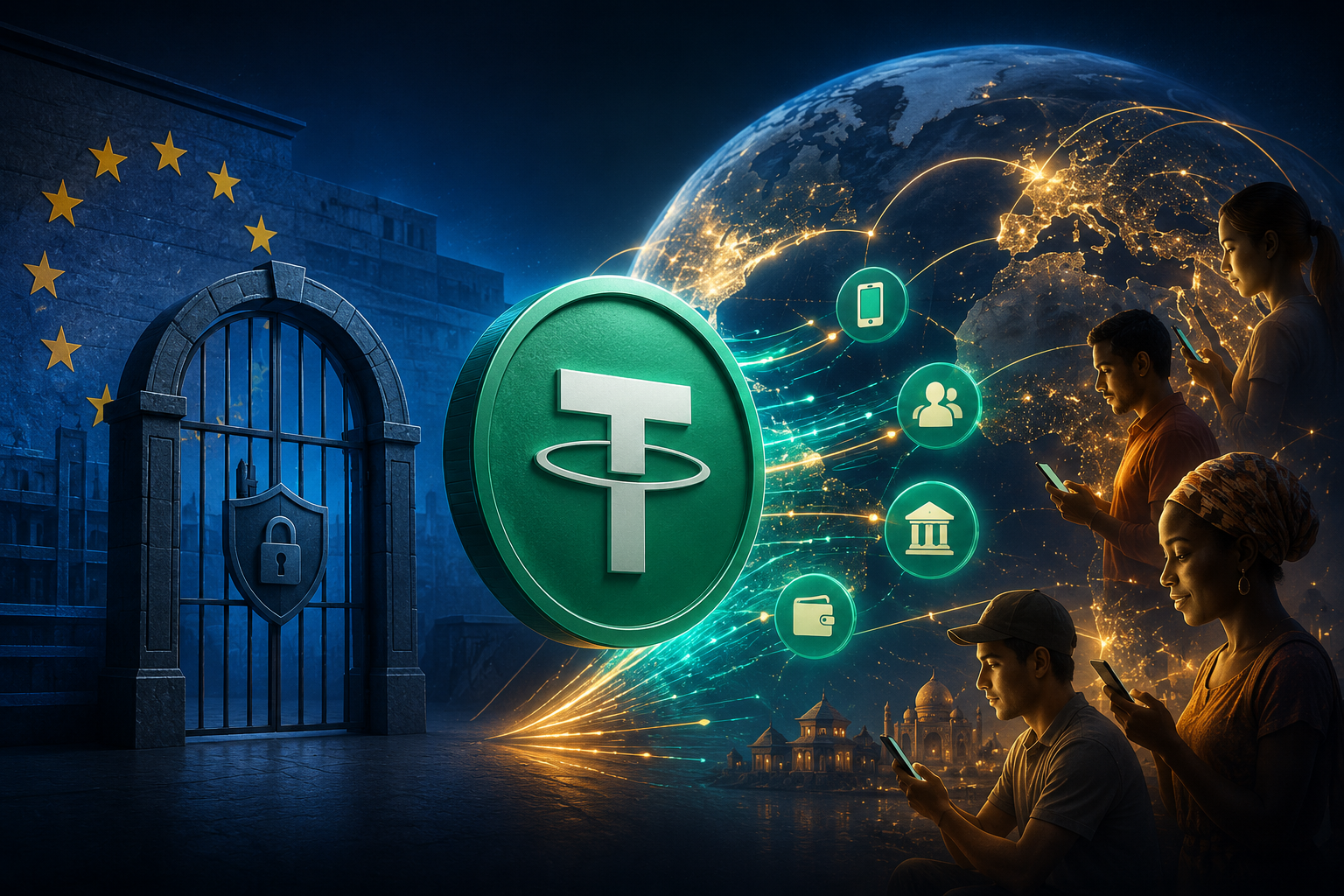
🇪🇺 MiCA is having an increasingly significant impact on the European cryptocurrency market. One of the most visible casualties of the new regulations is USDT, which is gradually disappearing from some of the regulated platforms operating in Europe.
One might therefore expect the world's largest stablecoin to begin losing users, liquidity, and significance.
It's just that… nothing like that is happening right now. 👀
Data cited by Cointelegraph Magazine reveals something far more interesting: Europe may be restricting access to USDT through regulated platforms, but global demand for Tether’s digital dollar remains exceptionally resilient.
🇪🇺 MiCA is a game-changer in Europe
Regulations governing stablecoins under the Markets in Crypto-Assets (MiCA) directive have been implemented in phases since 2024. The end of the transition period on July 1, 2026, has increased pressure on European cryptocurrency platforms.
The results are already visible.
Revolut has informed its European users that it will phase out USDT after August 31, 2026. Previously, other platforms serving customers in the European Economic Area had also imposed restrictions on Tether.
At first glance, this looks like a serious problem for USDT.
📉 Fewer regulated platforms offering tokens.
🇪🇺 Limited access for some European customers.
⚖️ Growing regulatory pressure.
And yet, global data do not show a slump.
🌍 Europe says “MiCA,” the world still says “USDT”
According to data from Artemis Analytics, the transition of MiCA to its next phase did not result in a noticeable decline in the supply or demand for USDT.
Nor is there any sign of a sudden migration of users between blockchains that could be directly linked to European regulations.
This leads to an interesting conclusion:
👉 Europe is an important cryptocurrency market, but it is not the entire cryptocurrency market.
Today, USDT operates within a global ecosystem that spans Latin America, Asia, Africa, and other regions where stablecoins are increasingly no longer used exclusively by traders.
They are becoming part of the everyday financial infrastructure.
💵 Stablecoins are no longer just a “parking spot” for money
Just a few years ago, the typical use case for a stablecoin was simple:
Bitcoin → USDT → wait → repurchase cryptocurrency.
Today, this model is far too simplistic.
Stablecoins are increasingly being used to:
💸 payments,
🌎 international transfers,
💱 currency exchange,
🏦 storing savings in digital dollars,
🤝 settlements between users and businesses,
📲 accessing financial services outside the traditional banking system.
Argentina is a great example.
In 2025, the Lemon platform processed approximately $9.3 billion in trading volume, a 60% increase from the previous year. The number of active users rose by 70% to nearly 1.8 million, and stablecoin volume increased by 45% year-over-year.
Interestingly, this is happening despite the easing of some restrictions on Argentines' access to traditional U.S. dollars.
This is an important signal.
Stablecoins no longer need to be merely a substitute for the dollar in countries with currency restrictions. For some users, they are simply becoming a convenient way to send and use money.
🚀 TRON and BNB Smart Chain demonstrate the scale of the phenomenon
It gets even more interesting when we look at the blockchains used to transfer stablecoins.
According to Artemis, the number of daily users on the BNB Smart Chain rose from approximately 318,000 in June 2024 to approximately 1.56 million in July 2026.
On TRON , the number of daily active users increased by about 44% during this period , reaching 908,000.
Why these networks in particular?
The answer is very practical: cost and convenience. ⚡
If a stablecoin is used for actual money transfers, the user isn’t necessarily interested in the ideological debate surrounding a particular blockchain. They want to send funds quickly, cheaply, and to a place where the other party can easily receive them.
And that is precisely why the USDT network effect is so difficult to break.
🕸️ USDT's greatest strength may be its own user base
A stablecoin is useful not only because it represents the dollar.
It is useful above all when other people want to take it as well.
This is a classic network effect.
The more exchanges, wallets, currency exchange platforms, DeFi protocols, companies, and ordinary users that use a given asset, the harder it is to replace it with something else.
USDT has a huge advantage here.
🌍 is globally recognized,
💧 has tremendous liquidity,
🔗 operates on multiple blockchains,
🤝 is accepted by a vast number of market participants.
Therefore, European regulations may change the gateway to USDT, but not necessarily the global demand for it.
🏧 USDT isn't limited to exchanges. It's also available on Bitomat
This is particularly important from the user's perspective.
Access to cryptocurrencies doesn't have to mean using only a traditional, centralized online exchange.
USDT is also available on Bitomats Bitomat.com, and an added benefit is that it can be used on several supported blockchain networks. 🔗💵
This allows users to choose a network based on their budget, transaction costs, or how they plan to use the stablecoins later.
This reflects a broader shift taking place in the market: cryptocurrencies are increasingly being accessed through a variety of channels —exchanges, wallets, DeFi, financial apps, and physical Bitcoin ATMs.
Regulating a single channel does not automatically mean the disappearance of the entire ecosystem.
💶 Will Europe create its own alternative to USDT?
MiCA, on the other hand, could accelerate the development of something that has remained on the fringes of the cryptocurrency market for years:
euro-denominated stablecoins. 🇪🇺💶
From a European user's perspective, they make a lot of sense.
If you earn, spend, and file your taxes in euros, using a dollar-pegged stablecoin introduces additional exposure to the EUR/USD exchange rate.
A euro-pegged stablecoin could help mitigate this complication.
Interest in such solutions is expected to grow, particularly among institutional clients.
The problem, however, is fundamental.
💲 Crypto Still Speaks the Language of the Dollar
Bitcoin can be global. Blockchain knows no borders. DeFi can operate 24 hours a day.
But the cryptocurrency world still largely prices everything in dollars.
A trader is looking at BTC/USD.
An investor is checking the market capitalization in USD.
Dollar-pegged stablecoins dominate trading pairs.
International settlements also very often involve the dollar.
MiCA could therefore increase the share of euro-denominated stablecoins within Europe, but changing the global settlement standard will be much more difficult.
🔥 The MiCA Paradox: Less USDT in Europe, but Not Necessarily Less USDT Globally
And this is where things get really interesting.
European regulations are indeed changing the market. There’s no point in downplaying this. For the average user, accessing certain stablecoins through regulated platforms may become more difficult.
At the same time, the data available so far suggest that MiCA is changing access to USDT more than it is affecting the global need for a digital dollar.
That's a huge difference.
Stablecoins have come a long way: from a tool that allowed traders to weather Bitcoin’s downturns to an infrastructure used to transfer billions of dollars between people, companies, and countries.
Europe is trying to regulate this market.
🌎 Meanwhile, the rest of the world continues to develop it.
And USDT—at least for now—shows that regulatory restrictions on access in one region do not necessarily mean a loss of global standing.
So perhaps the biggest winner in all this turmoil will be neither Tether nor its European competitors.
It could be the stablecoin itself, as a technology. 💵🔗🚀

.png)