


In this article
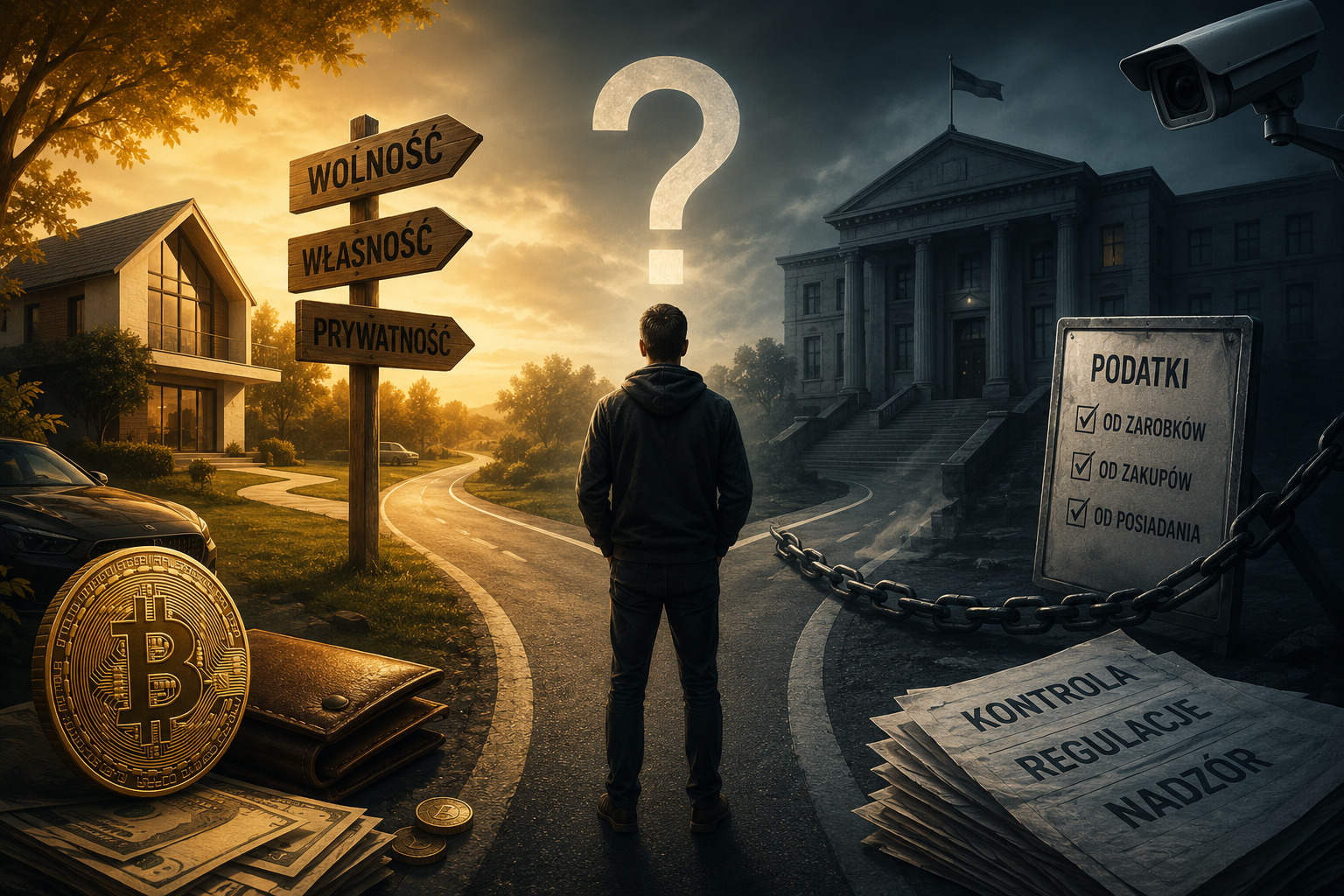
"You're taxed on what you earn, on what you buy, and on what you own."
This statement—regardless of whether you agree with Elon Musk or not—hits a very sensitive nerve in today’s world. Because behind taxes lies a question far deeper than simply, “How much should the government take?”
The real question is:
🏠 Do the things you have really belong to you?
Imagine a simple situation.
You work for years. You devote your time, energy, health, knowledge, and the best years of your life. You earn money. You buy a house or an apartment. You pay off the mortgage. You renovate. You take care of every detail. Finally, you feel that this place is truly yours.
But try not paying property tax for a few years.
In many countries, you'll quickly discover that the government still has a lot of say when it comes to property you consider your own.
And this isn't about some cheap slogan like, "Let's get rid of all taxes." That would be too simple. It's about something much more important.
It's about property lines.
⚖️ Where does a citizen’s property end and the state’s claim begin?
You pay taxes when you earn money.
You pay taxes when you spend money.
In many cases, you also pay taxes simply for owning something.
This raises a very uncomfortable question:
Is a citizen the owner of his or her property, or merely its temporary custodian?
Because if the government can keep charging fees for something you’ve already purchased with money that’s already been taxed, the line between ownership and control begins to blur.
This isn't just an academic discussion. It's an issue that affects everyone: homeowners, business owners, employees, investors, and families saving money for the future.
🕰️ Money isn't just paper. Money is a record of your life
There's one more thing worth mentioning.
Money doesn't fall from the sky. It's not just a number in a bank account, a bill in a wallet, or an entry in a banking app.
Money is condensed time.
Every zloty, euro, or dollar represents a piece of your life. Hours of work you’ll never get back. Decisions you can’t undo. Energy you could have devoted to your family, rest, a passion, or building something of your own.
That is why the tax dispute is not just a dispute over money.
This is a struggle for freedom.
It's about how much of the fruits of one's own labor a person should be able to keep for themselves.
🏛️ Taxes: The Price of Civilization or a Tool of Control?
Supporters of high taxes will say:
✅ Thanks to them, we have schools,
✅ roads,
✅ hospitals,
✅ security,
✅ infrastructure,
✅ social assistance.
And it's hard to pretend that these arguments don't exist.
On the other hand, critics will respond:
⚠️ The more the government takes, the less is left for the citizen,
⚠️ The more complicated the tax system, the greater the dependence on government agencies,
⚠️ The more fiscal obligations, the less room there is for personal decision-making, saving, and investing.
And that is precisely why the debate over taxes has been going on for hundreds of years.
Because, in reality, it’s not just about rates, thresholds, and forms. It’s about the relationship between the individual and the state.
Between freedom and control.
Between private property and public authority.
Between what belongs to you and what others believe should belong to everyone.
🔐 Why is this topic resurfacing with renewed intensity today?
Just a dozen or so years ago, many people didn’t give this much thought on a daily basis. Money was in the bank. Paychecks were deposited into their accounts. Taxes were “taken care of automatically.” Cash was a given.
Today, the situation is different.
More and more payments are being made digitally. More and more transactions are leaving a trail. There is increasing talk of regulations, limits, controls on the flow of money, digital identification, and new reporting requirements.
For some, it means greater security and the fight against fraud.
For others—a gradual shift in the boundaries of privacy and property.
And that is precisely why the question of what property really is has become so relevant.
₿ Bitcoin, Cash, and Privacy — A Reaction to the Loss of Control?
It is no coincidence that in recent years so many people have become interested in Bitcoin, cryptocurrencies, cash, and alternative forms of storing value.
It's not just about price speculation.
For many people, Bitcoin has become a symbol of something greater: an attempt to regain control over their own wealth.
This is a response to a world in which money is increasingly not only a means of payment but also a tool for surveillance, policy, and regulation.
Of course, cryptocurrencies don't solve all problems. They involve risks and volatility, and require knowledge and responsibility. But their popularity alone shows that people are looking for an alternative.
They are looking for a way to ensure that a larger share of the fruits of their labor truly belongs to them.
🤔 The most important question isn't, "Are taxes good or bad?"
That would be too easy.
The real question is:
How much control should the state have over a citizen's property?
Because taxes can fund the common good. But they can also become a mechanism that gradually erodes a sense of ownership, responsibility, and independence.
The line between the two is a fine one.
And that's exactly why it's worth talking about it—before we stop noticing it.
🚨 Are we becoming owners, or just administrators?
Perhaps the most important question is:
With each passing year, are we becoming more the owners of our assets, or are we increasingly acting as their administrators?
Administrators who can work, buy, invest, and own—but only on the condition that they regularly fulfill certain obligations, pay certain taxes, and accept certain rules.
There is no single, simple answer to this question.
But one thing is certain: if money is a record of our time, then the discussion about taxes, property, and privacy is, in reality, a discussion about how much of our lives truly belong to us.
And this is no longer a topic just for economists.
This topic is for anyone who works, saves, invests, and wants to take control of their own future. 🔥
This article was prepared by the team responsible for providing information about Bitcoin ATMs —the Bitcoin ATM.com team
. Contact us at support@Bitcoin ATM.com—ask about Bitcoin ATMs
.png)