

The GENIUS Act and stablecoins: How the U. S. Is Building Financial Dominance Through Apps

In this article
Imagine using convenient financial tools every day—online payments, global transfers, digital dollars. Everything works quickly, affordably, and seamlessly. Does that sound like progress? It certainly does. But beneath the surface, something much bigger is happening.
Dollars everywhere—even where you can't see them
The global economy is becoming increasingly reliant on the dollar. Whether you use PayPal, Stripe, or freelance platforms, in practice most of these systems operate using the U. S. dollar and rely on U. S. financial infrastructure.
Increasingly, this system is shifting toward stablecoins—digital equivalents of the dollar. For users, this means convenience:
- lower fees,
- fast transfers,
- easy access to global payments,
- protection against inflation of the local currency.
And best of all—it all happens in the background. You pay with a card, make a transfer, or use an app. You don’t even have to realize you’re using cryptocurrency.
Stablecoins: Convenience or a Clever Strategy?
Stablecoins are not just a technological innovation. They are a financial tool of enormous scale. Companies like PayPal and Stripe are integrating them into their everyday services, making them the natural choice for users.
The result? More and more people and companies:
- holds funds in digital dollars,
- is settled in dollars,
- operates outside the local banking system.
For the user, it’s a rational decision. For the system, it’s a massive shift in capital flows.
The GENIUS Act – the missing piece of the puzzle
In 2025, the U. S. enacted the GENIUS Act, which regulates the stablecoin market. At first glance, it’s about security and transparency. In practice, it’s about more than that.
The new regulations require that every stablecoin be fully backed by assets… but only of a specific type:
- in dollars,
- deposits in U. S. banks,
- short-term U. S. Treasury bills (T-bills).
This means one thing:
every digital dollar automatically supports the U. S. financial system.

A global side effect
The more people use stablecoins:
- the more capital flows to the U. S.,
- the greater the demand for U. S. debt,
- the stronger the dollar's position in the world.
No treaties or political decisions are needed. All users need to do is choose the most convenient solutions.
This is an entirely new model of domination:
not by government agencies, but by digital infrastructure.
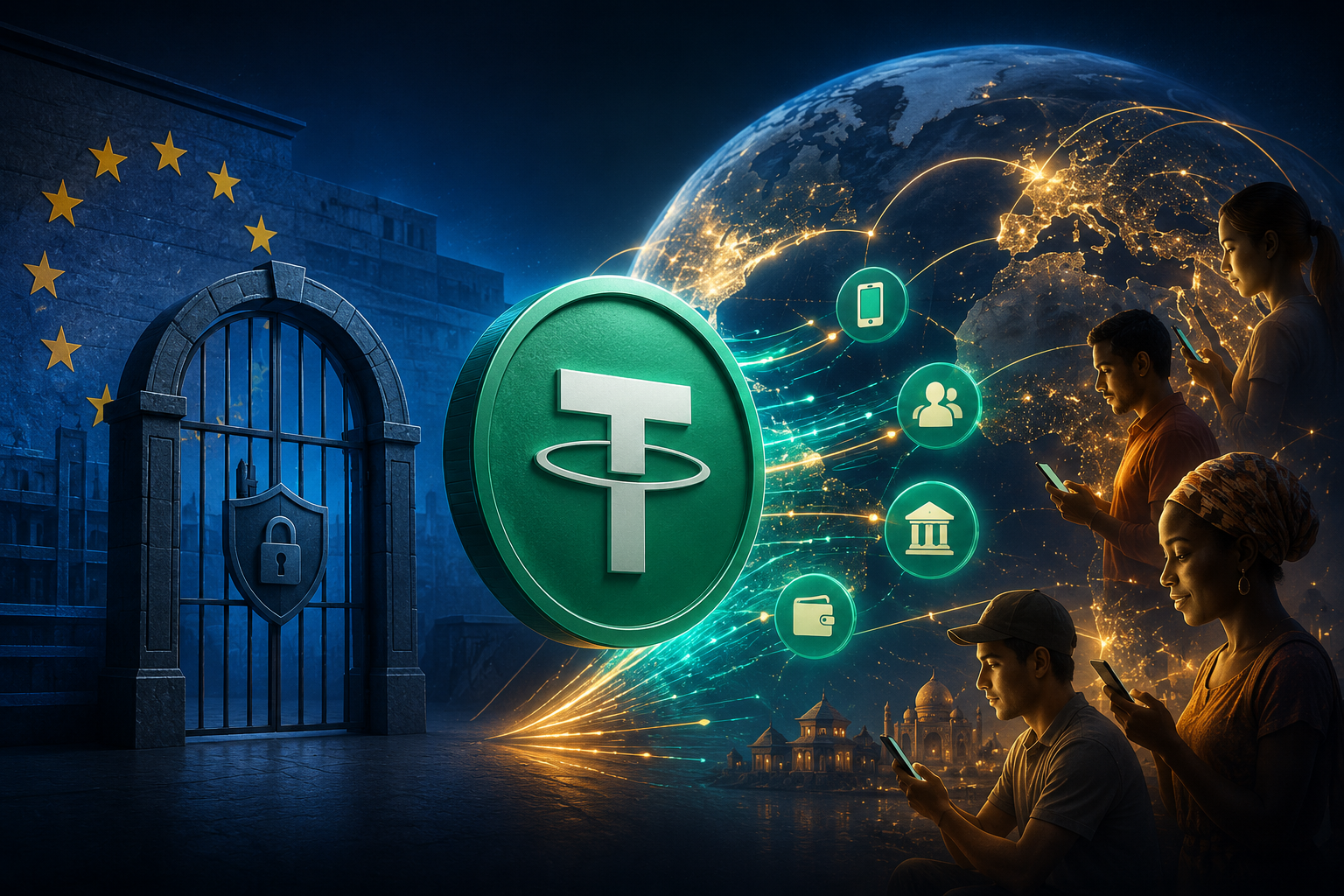
What does this mean for Europe?
For European users, this means convenience and access to global financial markets. But from a broader perspective, questions arise:
- Will Europe be able to develop its own alternative?
- What will become of the euro’s role in the world of digital payments?
- Are we giving up control over the flow of capital, even local capital?
A New Era in Finance
Stablecoins and regulations such as the GENIUS Act show that the battle for financial dominance has shifted to the world of apps and protocols.
You don't have to force anyone.
All you need to do is create a system that everyone wants to use.
And that is exactly what is happening right before our eyes.
.png)