Help


For years, people have tried to convince us that cash is a thing of the past.
That a banknote in your wallet is something suspicious, archaic, almost unhygienic. That the “modern person” pays with a phone, a watch, an app, a facial scan, or a fingerprint—and, best of all, smiles while doing so at the terms and conditions they’ve never read.
And then Switzerland comes along and says:
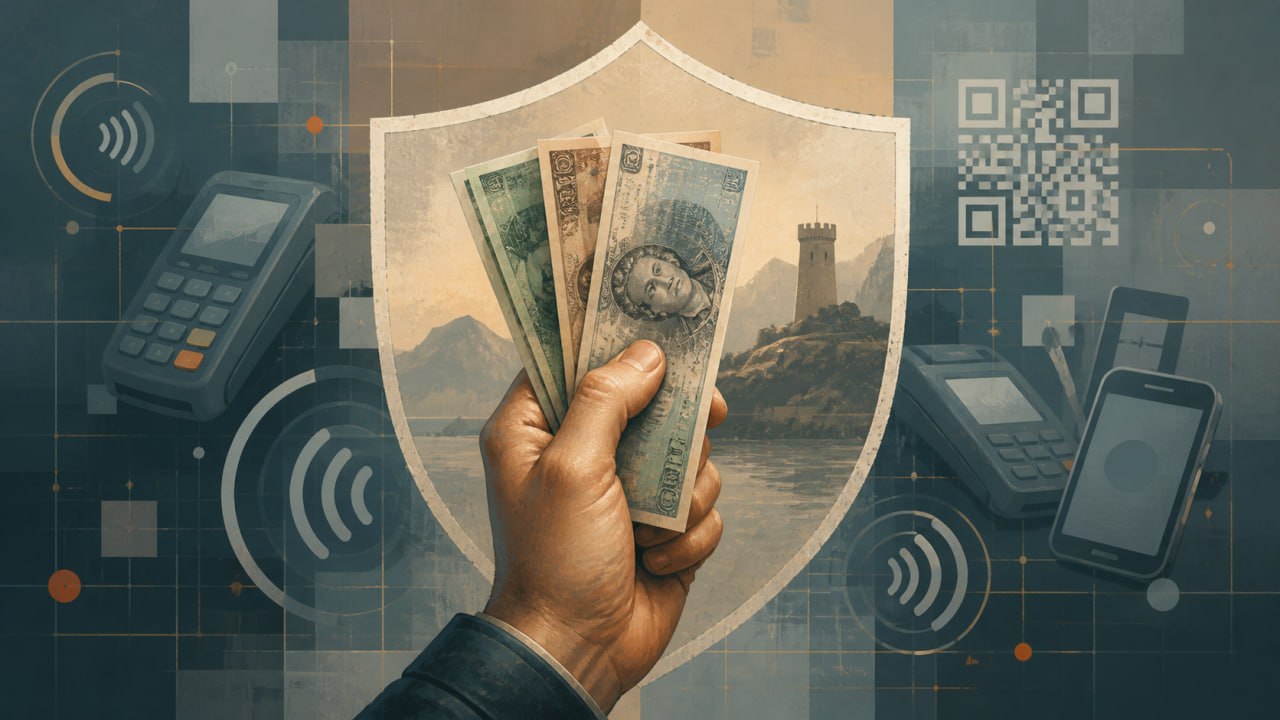
On March 8, 2026, the Swiss voted on whether to enshrine the protection of cash in the constitution. Two proposals were on the table: the “Cash is Freedom” citizens’ initiative and the government’s counterproposal.
In the end, the counterproposal was approved by a very clear margin—according to the available results, it received the support of approximately 73.4% of voters. The citizens’ initiative went further and did not pass, but the general direction is clear:
Access to physical cash is to be protected by the highest legal standards.
And that’s when all the digital propaganda starts to run out of steam. 🫠
Because if cash really were just a “relic of the past,” no one would be collecting signatures.
No one would be organizing a referendum.
No one would be enshrining coins and banknotes in the constitution.
People don't fight for things they don't care about.
They are fighting for what they see as their last line of defense.
Cash doesn’t require batteries.
There are no system failures.
It doesn’t perform updates at the worst possible moment.
It doesn’t display a message saying “transaction declined” because some algorithm, bank, payment processor, or bureaucrat decided you’re out of luck today.
Cash is brutally simple:
Here you go. Pay up. End of story.
And that’s exactly why it bothers so many people.
Digital money is convenient—that’s for sure.
But comfort is often a gilded cage.
When every payment goes through an intermediary, every purchase leaves a trace.
When every trace can be analyzed, profiled, and blocked, money ceases to be a tool for citizens and becomes a leash.
Well-designed.
Shiny.
With cashback.
With push notifications.
But still on a leash. 🐕🦺
The Swiss case illustrates something very important:
Even in one of the most developed, stable, and financially advanced countries in the world, people aren't willing to part with their cash without a fight.
Supporters of keeping cash pointed out:
✅ freedom
✅ security
✅ security in crisis situations
✅ the ability to make payments without digital surveillance
✅ a viable alternative to the banking and payment system
And that's great.
Because today, cash is more than just a payment method.
If the government, banks, and corporations say:
“Don’t worry, everything will be digital, fast, and secure.”
A reasonable person should ask:
Great. What if I don't want to?
What if I want a form of money that works outside the app?
What if I want to pay without having to explain myself to a machine?
What if I want to maintain a little privacy in a world that increasingly treats security as suspicious behavior?
The answer is:
Cash isn't necessary just because everyone wants to keep their savings under the mattress.
It’s not because everyone is against technology.
It’s not that digital payments are bad in and of themselves.
The problem arises when digital convenience turns into digital coercion.
And coercion, even when wrapped up in a beautiful user experience, is still coercion.
That is why the Swiss vote is so symbolic.
It shows that people can use cards, apps, and bank transfers while still demanding a legal guarantee of access to cash.
That's not a contradiction.
It's just common sense.
A civilized society should not have to choose between technology and freedom.
It should have both.
The cash is:
🔸 a safety net
🔸 a Plan B
🔸 an emergency exit
🔸 a privacy tool
🔸 the last line of defense against total financial control
And that brings us to cryptocurrencies and Bitcoin ATMs.
Because if cash is the last physical bastion of financial independence, then Bitcoin ATMs one of the last bridges between the world of cash and the world of digital assets.
In a world where more and more financial services are trying to tie users down with terms and conditions, limits, forms, and consent requirements, the ability to use cash remains essential.
That is why we are making it clear:
Not as a sentimental nod to paper bills.
Not as a “fallback option” for those who can’t keep up.
But as a conscious choice.
Because cash is:
✅ freedom of action
✅ security in everyday life
✅ independence from banks
✅ resilience to system failures
✅ a viable alternative to digital coercion
Cash isn’t a relic.
Cash isn’t a problem.
Cash isn’t a shameful afterthought in the “modern economy.”
And Bitcoin ATMs a place where this stronghold continues to operate.